

Mirrors: when reversing
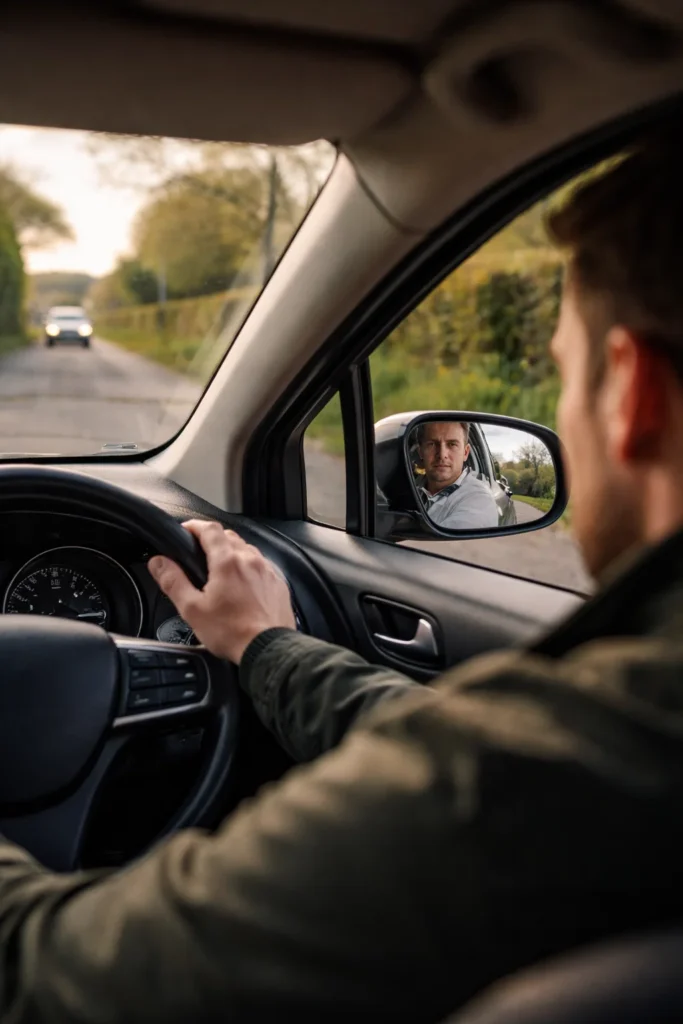
Mirror follow-up ✅ — mirror use while reversing is one of the most closely observed parts of the UK DVSA driving test, because poor observation is one of the top reasons for failing.
Here’s the full explanation for learner drivers 👇
🔁 USING MIRRORS WHEN REVERSING – HIGHWAY CODE & DVSA GUIDE
📘 Relevant Highway Code Rules: 202–206
“Before you move off or reverse, you should use all mirrors to check the road is clear and look round to check the blind spots.”
“You must not reverse your vehicle further than necessary.”
“Always reverse slowly and carefully, using effective observation.”
🪞 1️⃣ BEFORE YOU START REVERSING
✅ Check mirrors in sequence:
- Interior mirror – to see directly behind you.
- Left and right door mirrors – to see both rear sides of the vehicle.
- Over-the-shoulder checks – physically look through the rear window and both blind spots.
🧭 Instructor tip:
Mirrors give you a picture; looking over your shoulder gives you confirmation.
🚘 2️⃣ WHILE REVERSING
The DVSA expects you to:
- Reverse slowly (creep speed).
- Keep looking all around — not just in mirrors.
- Use mirrors frequently but not constantly; alternate between mirrors and direct observation.
Recommended mirror use:
| Direction of Reverse | Main Mirror Focus | Additional Checks |
| Straight back | Interior mirror | Effective and continues observation. Glance left and right mirrors regularly and over left and right shoulders. |
| Reversing left | Left door mirror | Look out of rear window to monitor corner swing |
| Reversing right | Right door mirror | Check for road users behind or beside |
| Reversing into bay | Both door mirrors | Effective and continues observation. Glance left and right mirrors regularly and over left and right shoulders. Constant alternation, check both sides for white lines or cars |
| Parallel parking | Left mirror mainly | Alternate between both mirrors and direct rear glance |
⚠️ 3️⃣ DO NOT RELY ONLY ON MIRRORS
The Highway Code (Rule 202) is clear:
“You MUST NOT reverse from a side road into a main road. When reversing, look mainly through the rear window and not only in mirrors.”
So while mirrors are vital, your main observation must be direct vision — looking over your shoulder.
🧭 4️⃣ BLIND SPOTS AND SPECIAL CARE
- Mirrors cannot show directly behind the bumper — watch for small children or obstacles.
- If your rear view is restricted (e.g. van, load, fogged window), use mirrors more frequently and consider asking someone to guide you.
- On test, examiners watch for active scanning — moving your head between mirrors and windows.
🚦 5️⃣ AFTER REVERSING
✅ Before moving forward again:
- Check interior and side mirrors.
- Make sure it’s safe to proceed — especially if others have moved behind or beside your vehicle while reversing.
❌ COMMON LEARNER FAULTS
- Staring into one mirror too long (tunnel vision).
- Not looking over the shoulder before or during movement.
- Relying on reversing camera or sensors only (DVSA doesn’t accept this as full observation).
- Not stopping if someone appears behind.
💡 Golden DVSA Rule
“Look, assess, then move — mirrors support your eyes, not replace them.”
Also check out this post on Using Mirror Whilst on the Move.