News & Media
SIGNALLING ON UK ROADS — THE GUIDES
🚘 SIGNALLING ON UK ROADS — THE GUIDES 1️⃣ The Core Principle Always “Mirror – Signal – Manoeuvre” (MSM).Before any turn, lane change, or move that affects other road users: Check mirrors → Give signal → Then act. 🪞 1. MIRROR Check: 🚨 2. SIGNAL Use your indicators (turn signals or hand signals) when: 📏 3. DISTANCE / TIMING BEFORE JUNCTIONS There’s no single fixed distance (because roads and speeds vary),but DVSA guidelines suggest “in good time, not too early
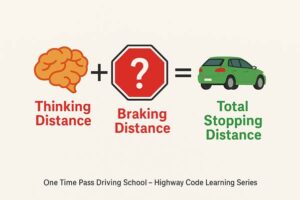
SPEED & STOPPING DISTANCE — UK HIGHWAY CODE GUIDE
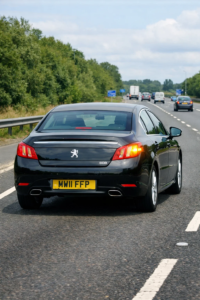
Speed and Stopping Distance is one of the most crucial Highway Code topics for UK learner drivers and instructors.Below is a complete One Time Pass Driving School guide to Speed and Stopping Distance, including formulas, tables, graph, and safety principles. 🚗 SPEED & STOPPING DISTANCE — UK HIGHWAY CODE GUIDE (One Time Pass Driving School — Highway Code Learning Series) 🧮 1️⃣ The Formula Thinking Distance + Braking Distance = Total Stopping Distance 🧠 2️⃣ Thinking Distance The distance your
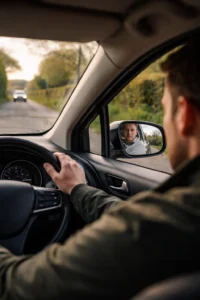
Mirrors: DVSA safe reversing
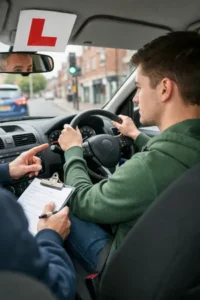
Mirrors: when reversing Mirror follow-up ✅ — mirror use while reversing is one of the most closely observed parts of the UK DVSA driving test, because poor observation is one of the top reasons for failing. Here’s the full explanation for learner drivers 👇 🔁 USING MIRRORS WHEN REVERSING – HIGHWAY CODE & DVSA GUIDE 📘 Relevant Highway Code Rules: 202–206 “Before you move off or reverse, you should use all mirrors to check the road is clear and look
Mirror: safe driving observation routines.
DVSA safe driving This is a core part of the DVSA driving standard and the Highway Code guidance on safe driving observation routines. Here’s the full breakdown 👇 🪞 USING MIRRORS ON UK ROADS – THE COMPLETE GUIDE 1️⃣ Purpose Your mirrors help you: The DVSA expects you to use mirrors at the right time, in the right order, and make decisions based on what you see. 🚗 THE MIRROR ROUTINE – MSM / MSPSL MSM = Mirror – Signal